Hair-friendly hair ties should be included in everybody’s wardrobe and are used by thousands of people daily for securing their hair during workouts, at work, shopping, and other activities that are part of everyday life.
However, not all hair ties with custom print are the same. Some custom scrunchies with logo are created for the purpose of protecting your locks and minimizing the risk of breaking them, while others can lead to hair damage like split ends and loss of hair.
Whether you have straight hair, textured, fine, or thick hair, you need to understand which hair ties won’t hurt your hair in the future.
Table of Contents
What Makes a Hair Tie “Hair-Friendly”?
In this instance, the hair tie ought to help anchor the hair, yet not lead to too much strain or rubbing. The right hair dressing device ensures that a hair fix stays put, but that it doesn’t stress out specific hairs.
Ideal hair ties have:
- Gentle hold
- Smooth surfaces
- Minimal snagging
- Even pressure distribution
- Comfortable wear
- Reduced breakage
Evenly distributed pressure when using a hair tie is more likely to prevent the growth of weak points where hair snaps. Materials with smooth finishes will minimise friction that may lead to tangling, frizzing, or end splits.
When deciding on a hair tie, take the following features into account:
- Does it go smoothly through hair?
- Does it fold in a full line of creases when folded?
- Does it catch clumps as it is being pulled?
Selecting the accessory that is comfortable and also flexible is able to make an impact in promoting stronger, healthier hair as well as decreasing day-to-day wear.
Best Materials for Damage-Free Hair Ties
A hair tie’s material has a significant impact on the way it will respond to your hair. 80 million people in the US suffer from hair loss.
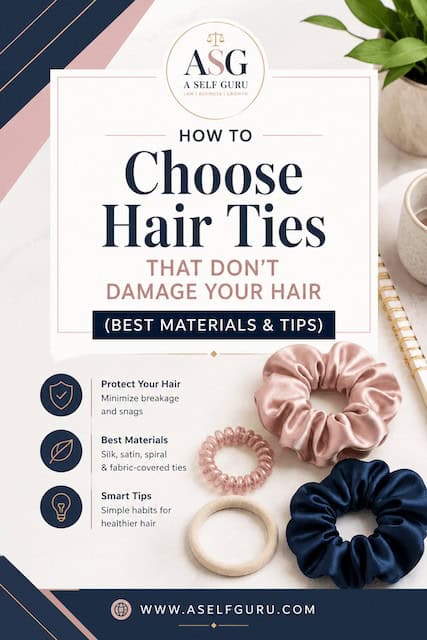
Silk Hair Ties
It’s commonly acknowledged that silk is one of the gentlest fabrics to choose when it comes to using it for hair care.
Benefits include:
- Reduced friction
- Less tangling
- Fewer hair creases
- Smooth surface contact
- Appropriate for nighttime use
Women who want to avoid breakage and maintain their hairstyle will choose Silk scrunchies to avoid any pulling or styling.
Satin Hair Ties
Satin has a number of the same qualities as silk but is less expensive.
Advantages include:
- Smooth texture
- Reduced snagging
- Comfortable hold
- Reduces friction compared to other elastics
- Fabric-Covered Elastic Ties
Spiral Hair Ties
Spiral hair ties spread pressure differently from regular hair ties.
Advantages include:
- Smoother-strands.Less UST.
- Reduced creasing
- Wear clothes that are comfortable for exercise.
- Easy removal
As a general rule, the softer and more flexible the material, the better.
Choosing the Right Hair Tie for Your Hair Type
Different kinds of hair exist to suit various needs and individuals, so you will always be sure that you are picking the correct hair ties for your hair.
- Fine Hair
- Hair that is finer may suffer from tension and damage.
- The correct hair ties for fine hair include:
- Silk scrunchies
- Satin hair ties
- Fabric-covered elastics
Curly and Textured Hair
Styling with curly hair can be challenging, but accessories that reduce friction and keep the curls intact can make a big difference.
Recommended options:
- Silk scrunchies
- Satin scrunchies
- Wide fabric-covered ties
They tend to reduce the frizz and prevent the snagging of hair.
Long Hair
Lengthy hair could apply more strain to hair ties due to weight and bulk.
Choose:
- Elastics that are tough but have a lot of give.
- Soft fabric coverings
- Ties for everyday use
Common Mistakes When Using Hair Ties
47% of consumers struggle with hair loss as a main concern. When it comes to hair ties, there are some things that people may do incorrectly.
Common mistakes include:
- Tight ponytails
- Tight buns
- Daily pulled-back styles
- Old or Stretched-Out Hair Ties
Older hair ties may need to be wrapped over a number of times to secure, adding strain to the hair. The removal of hair ties too quickly will lead to snapping and entangling of the hair strands.
How to Use Hair Ties Safely
Even picking a suitable product will not be enough. There is also a role to be played with proper use habits.
To minimize damage:
- Rotate hairstyles regularly
- Be careful not to be too tight-fitting
- Remove ties gently
- Use new hair ties to replace old, broken, or super-tight ones
- Opt for larger-sized accessories where appropriate.
- Allow hair to take a break from styling regularly.
Save Your Ink offers stylish and functional hair ties for everyone who wants to feel comfortable every day.
Signs Your Hair Ties Are Damaging Your Hair
Sometimes the symptoms of hair tie damage become apparent over time and are not noticed.
Keep an eye out for the following signs:
- Increased Hair Breakage
- Split Ends
- Hair Creases
- Tangling and Snagging
- Thinning Around the Hairline
The constant strain can be a factor that may lead to traction-related hair fall, especially near the hairline or in the temples.
Conclusion
Although it may not appear to be an essential aspect of any hair care routine, it has the potential to become a critical factor in determining beauty in the long run. The list of hair ties that are ideal for maintaining healthy hair consists of silk, satin, spiral wrap, and fabric-covered elastic, as they offer reduced traction, minimal breakage/annoyance, and increased comfort.
Apart from selecting the right materials for your accessories, it is also important for you to develop some good hair styling practices. Combining this practice with the right use of hair accessories can make a difference by improving your hair health, preventing splits, and ensuring that your hair is healthy.
Author bio: Laura Phoenix is a British blog writer and online content creator based in Bulgaria. She specializes in creating engaging, interesting content for businesses around the world on a variety of topics, including travel, health, and wellness.