I’ve been blogging since 2013. And while there were many ups and downs, there are certain moments and milestones I just won’t forget.
One specific memory is the moment I received an email from a company offering me $100 to publish a post on my site with 1 link back to their client’s website.
I had no idea what this was all about, that it was even possible, and that someone could actually pay me $100 for something I was doing anyways.
It was hard to believe it would actually work, until the payment came through.
The whole thing took less than 30 minutes (publishing the post they provided), I had new content for my site and to share with my audience, and I got paid for it.
Back then I was no one, but someone believe in my platform and showed me it’s an asset. So it was time I began treating it like one.
Soon after that, I started doing my research and discovered the secret world of sponsored blogging. The one income stream almost no blogger discloses or feels comfortable talking about, but which can be so profitable, and even turn into recurring revenue.
At the time, I was still freelancing – writing articles for clients while growing my blog Let’s Reach Success on the side (and earning a bit from it here and there, be it from ads or affiliate marketing or eBook sales).
But soon, I started treating my blog like the asset it was and learning more about sponsored posts.
There definitely wasn’t (and still isn’t) a lot of information about it online, and yet, so many bloggers are earning massive amounts from working with brands every single month.
I believe in this business model because over the next yeas, I earned 6 figures solely from that one income stream.
My site was added to all the good sponsored networks out there, I began working with guest posting agencies and getting regular orders, I learned the ins and outs of the industry, mastered negotiating my rates and conditions, I update my media kit strategically every year, and every day I wake up to emails from potential sponsors that want to work with me.
That’s why I teach this and share what’s happening behind the scenes. So other bloggers can also give it a chance, understand this is a totally legit way to earn from your blog, and take the steps necessary to make your blog sponsor-ready and actually get on the radar of sponsors.
So in this guide, I’ll share some of these steps with you.
It gives me great pleasure to introduce bloggers to a new income stream. I know many of you are intimidated by it or don’t know enough about it.
Maybe some of you have been approached by potential sponsors via email but you simply didn’t know how to handle that, so you let the opportunity slip away.
Or it sounded scammy and you decided not to try it. Or maybe you had a bad experience once, didn’t get paid, or it didn’t go according to your terms, and you didn’t feel good after the collaboration so you decided it’s not for you.
But there’s a better way.
There are things you can do to turn your blog into a sponsorship machine, to actually enjoy that, to earn more by investing minimum hours weekly/monthly, to raise your rates whenever you feel like, and to be the one in charge of the conditions and how the whole partnership goes.
I teach all this inside my course The Blog Sponsorship Boss.
You can also grab my free guide on how to start earning from sponsored blog posts.
But for now, let’s dive into the steps you can take now to turn sponsorships into a recurring blog income stream:
Table of Contents
How to Start Earning from Sponsored Posts
Follow these 7 crucial steps to start making money from sponsored posts.
1. Get your blog ready for sponsors.
If you just started a brand new blog, you might not be ready to pitch sponsors yet or expect anyone to notice you.
Here’s what you can do in that case:
- wait till your blog is at least 6 months old before adding it to sponsored networks or pitching brands;
- make sure your site looks good, loads fast and functions well;
- have all the important pages in place (About page, Contact page, legal pages like Disclaimer, Terms of Service and a Privacy Policy);
- have clearly defined blog categories;
- publish at least 5-10 relevant blog posts in each;
- get into the habit of publishing new content regularly;
- connect your site to Google Analytics and Google Search Console so you can start tracking your metrics (and later share them with brands);
- optimize your content and website and make sure it appears correctly in search engines.
2. Create your packages.
What will you offer sponsors exactly? And under what conditions will you work?
While you may still need to negotiate almost every deal, it’s good to decide on these in advance. It also makes you look more professional as brands will often ask about your media kit (more on that in a bit), and that should contain your rates and packages.
And example of a package is a paid guest post.
Some conditions I work with, for example, include:
- getting paid in advance (via a PayPal invoice);
- allowing only 1 dofollow link in the article;
- using natural anchor text;
- keeping that link on my site for just 1 year;
- receiving original content on a topic related to my site.
I also need to approve the URL, anchor text and blog post topic first, and often reject orders due to some of these not being the right fit.
Another package I offer is simply a link placement in an existing post.
Over to you now. What will yours be?
You can also offer a series of posts (I have that too, I call it a bundle), a newsletter mention, social media promo, etc.
3. Decide on your rates.
What you charge is totally up to you. There are actually no fixed rates in this industry.
I’m a fan of value-based pricing. Price your services based on the value you provide. And what that value is, well that’s based on how you define it.
On sponsored networks, you may need to lower your rates sometimes to actually get some orders. But when negotiating this inside emails, use your intuition and what you think your platform is worth.
You’re in charge. The client is interested in leveraging the platform you’ve built and gaining SEO advantages from it. You can’t really put a number on it.
If you offer permanent link placement, that means they benefit from the SEO value it provides for a lifetime. That’s continuous marketing. So charge more.
I know it can be scary in the beginning, especially when you lose clients because of this. Go with what feels right, though.
For example, you can charge less in the beginning, and once you have enough revenue, increase your rates. You may still keep your old prices with your oldest clients, the ones you bring you orders monthly or who are just so pleasant to work with.
Or when you feel like a company is big and actually has the budget for it and has worked with bigger bloggers than you, ask for a higher amount, even if you haven’t officially updated your rates in your media kit. It can always work.
And when it does, this becomes your new minimum rate.
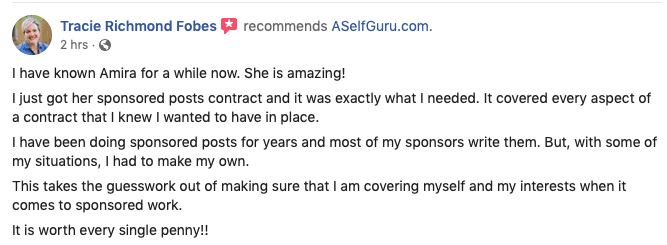
This is the Sponsored posts contract template you can use to work with brands safely.
4. Create your media kit.
A media kit is basically your blog’s resume. It’s a document that shows sponsors why it’s worth working with you.
You can design one easily with a tool like Canva (use one of their templates, they are already perfect!).
Inside, include your blog’s stats, categories, what it’s about, and anything else sponsors might like seeing (such as email list size and social media reach).
Add your packages and rates, of course. And featuring previous partnerships may help a lot.
Don’t forget to keep your media kit updated. The way you’ll use it is by directly sending it to brands via email, either when you pitch them yourself, or when they approach you and ask for it.
Once you have that, you can move onto the next step.
5. Join sponsored networks.
One of the best ways to get on the radar of sponsors is to add your site to sponsored networks.
They are marketplaces/platforms that connect bloggers/publishers with advertisers,
I remember how hard it was for me to get access to these back in the days, and now I discover new ones monthly. I’m often also invited via email to join some I’ve never heard of before.
There’s a big chance you won’t get any opportunities from some of the networks, but at the same time, you never know where your next paid partnership can come from.
From some, I’ve earned once. From others, I’ve earned a total of 5 figures over the years. Others send me new paid opportunities every now and then, and it all ads up.
But also, this literally puts you in front of the eyes of people and companies that have the budget for this. They do influencer marketing and want their links to appear on blogs like yours. So just having your site as part of the network’s database can lead to new doors opening for you.
Just being listed there can mean you get approached by sponsors via email. They will know your rates and the fact that you’re open to sponsorships, so they will contact you to discuss this further.
I recently created a list of the best sponsored post networks and guest posting agencies (these are even harder to find) that connect bloggers with brands. As this is pretty private information (based on relationships I’ve formed over the years, and crazy amounts of research), I decided to include them in this PDF guide.
6. Pitch your favorite brands.
Next, it’s time to take a deep breath, gather your courage, and contact brands directly.
To make this easier and increase your chances of success, start with the ones you’re already a fan of, and – ideally – using.
If you’re an affiliate of some companies and use their products or services, why not contact them personally, via email, and suggest you write a dedicated post on your platform, and that this is a paid collaboration you’re now offering?
It can also be a review post that will live on your platform forever, and which you can share with your email list. That’s quite valuable for the brand and they might agree (in case it’s part of their marketing budget).
Do the same with every single tool you’re using online.
If you aren’t ready for that, start writing reviews of tools you’re using, comparison posts, and include some in roundup posts. This may get the brands’ attention, or make it more likely to land a paid deal when you reach out to them and show them these posts on your site.
Then, think what else your audience might love and want to use, or is already using. Contact brands in that field and offer them exposure to your audience. You never know who will be up for it and pay you more than you expected.
7. Keep growing your blog.
Regardless of whether you get rejected 100 times or land your first sponsored post pretty soon, there’s one thing you should always keep doing – growing your blog.
While hundreds of thousands of page views definitely aren’t necessary to earn a decent income from sponsored blogging, you still need to be posting new content, optimizing your blog, growing your email list, and increasing your domain authority.
This will eventually lead to brands finding you and offering you to work together.
Final words on Making Money from Sponsored Posts
So that’s how you get into blog sponsorships and can turn this into recurring income over time.
Please keep in mind you don’t need to be a big name in your industry or a blog with massive traffic and following on socials in order to see results. In fact, I once made $500 from one sponsored post on a blog that gets 4K page views a month.
Another fun fact is that sponsors have paid me more when my main blog was getting less traffic, than what I earned back in the days when I reached 100K monthly page views.
I hope this inspires you to give sponsored posts a try and actually stick to it until you see results. Like any other blog income stream, it takes time to build it, but once you do, it can make you money forever.
Let me know if you have any questions in the comments below.
Have you tried sponsored blogging? If so, how did it go?
Author Bio
Lidiya Kesarovska is a business owner and course creator, who’s been blogging since 2013. She runs Let’s Reach Success, where she covers blogging, business, mindset, and lifestyle design, Bold Business School, and Blogging with Lidiya, her site dedicated to helping bloggers make money and grow their platforms.
She’s been recognized as one of the Top 10 Course Creators and Experts to Watch in 2021 by Yahoo! Finance and have been featured in TIME magazine, Thrive Global, Disrupt Magazine, and more.
She’s devoted most of her life to personal development and reclaiming her freedom by building a blogging business. Now, she’s obsessed with helping you do the same!
Connect with her on Instagram or TikTok.