
When it comes to the importance of visual content, it’s not just about aesthetics—it’s about building trust, enhancing clarity, and making your brand feel real and relatable to online clients.
Have you ever gotten that feeling when you’re scrolling a website and wonder, “Is this for real?”
You’re not the only one. It’s tricky to trust someone behind a screen when you can’t see or talk to them face to face.
That’s why visual content is such a game-changer for entrepreneurs trying to build trust with online clients.
It’s not just about looking pretty—it’s about making your business feel real, authentic, and easy to understand.
Visual content has transformed from a nice-to-have marketing add-on into an absolute necessity for modern businesses.
With attention spans shrinking and digital noise increasing, brands that master visual storytelling aren’t just getting noticed—they’re driving real results.
For example, visual content is 40 times more likely to be shared on social media than other types of content, and people retain 65% of visual information three days later compared to just 10% of text-only information.
Whether you’re a startup trying to break through the clutter or an established company looking to refresh your marketing approach, understanding how to leverage visual content can be the difference between blending in and standing out.
This comprehensive guide will walk you through everything you need to know about creating, implementing, and measuring visual content that drives engagement, builds trust, and converts viewers into customers.
Table of Contents
What is the Significance of Visuals? The Psychology Behind Visual Content
Think about it: when was the last time you bought something online without checking pictures or videos? Hardly ever, right?
We’re visual creatures.
Photos, videos, and interactive content do the heavy lifting for you.
They show your clients who you are, what you do, and why you’re worth their time.
But it’s got to be authentic. Stock photos and overly polished images? That’s noise, not value. People see through that instantly.
Instead, the right visual such as real photos of your workspace, candid shots of your team, or behind-the-scenes glimpses do wonders to make you relatable.
And if you’re in real estate or rentals, create virtual property walkthroughs—letting clients explore from their couch, when clients see you as a real person or a real team, their guard drops.
The human brain processes visual information at an incredible speed—approximately 60,000 times faster than text.
This biological advantage makes visual content an powerful tool for capturing attention in our information-saturated world.
Visual content taps into our emotional centers more effectively than text alone.
When you see an image or watch a video, multiple areas of your brain activate simultaneously, creating stronger neural pathways and more memorable experiences.
This explains why you can probably recall a commercial you saw years ago but struggle to remember what you read in an email yesterday.
The emotional impact of visuals extends beyond memory.
Images and videos can evoke immediate emotional responses—joy, trust, excitement, or empathy—that influence purchasing decisions.
A high-quality product photo can convey professionalism and quality, while a behind-the-scenes video can build trust and authenticity.
Visual cues also help people process complex information more quickly.
Instead of reading through paragraphs explaining how a product works, customers can watch a 30-second demonstration video and immediately understand the value proposition.

The Importance of Visual Content to Boost Online Sales
When thinking about the importance of visual information, here are the 3 ways it helps small businesses and your marketing campaigns.
Shows Virtual Experiences
Here’s where it gets fun—virtual tours and interactive stuff.
Say you’re selling something tricky to explain—a space, a gadget, or some custom process. Instead of just talking about it, why not show it?
With virtual tours, clients can wander through your space right from their couch. Peek into rooms, zoom in on the details, get the vibe without ever stepping foot there.
More and more entrepreneurs are using these tools because they crush skepticism.
When clients can see every nook and cranny virtually, there’s less room for doubt.
They feel more comfortable because they’re not just trusting your word—they’re experiencing it themselves. This not only increases your brand awareness but also a powerful way to build trust quickly.
Oh, and don’t forget the basics—legal pages for websites and blogs keep you protected while you impress with these types of visuals.
Explains Complex Topics Easily
Some businesses offer services or products that are just… tricky.
Technical jargon, abstract concepts, complex ideas, multi-step processes—these can confuse clients and make them hesitate.
That’s when great visuals provide valuable information in easy to understand manner.
Videos, animations, or interactive diagrams break down complexity in a way words alone can’t.
They answer the “How does this actually work?” question before a client even has to ask.
Plus, blogging tools help you share these explanations regularly, making your message clear and consistent.
When you take the time to make your offering clear, you’re basically saying, “I want you to understand this fully because I respect you.” That honesty builds serious credibility and gives you better results.
Increases Transparency
Let’s be real: people online are naturally suspicious.
Scams and shady deals are everywhere. So how do you cut through that noise?
You’re already ahead if you prioritize transparency. Showing your workspace, your products in online videos, or even your team meetings—these little windows into your day-to-day life say a lot.
Virtual tours and live demos help too. They say, “Here it is, all laid out. No tricks, no smoke and mirrors.” It’s the kind of openness that gets clients nodding along instead of backing away.
Essential Types of Visual Content for Modern Marketing
Here are three types of visual content to reach a wider audience.
Eye-Catching Images That Convert
High-quality images remain the foundation of visual marketing.
Here are some more marketing strategies to grow your business.
Professional product photos, lifestyle images, and brand photography help establish credibility and showcase your offerings in the best light.
Stock photos can work when chosen carefully, but original photography that reflects your brand’s unique personality will always perform better.
Infographics excel at making complex data digestible and shareable.
They’re particularly valuable for B2B companies that need to communicate statistics, processes, or comparisons in an engaging format. A well-designed infographic can simplify a 1,000-word article into a visual story that’s easy to understand and remember.
User-generated content adds authenticity to your visual strategy.
Customer photos, testimonials with headshots, and real people using your products create social proof that builds trust more effectively than polished marketing materials alone.
Video Content That Engages
Explainer videos and product demonstrations address customer questions before they’re even asked.
These videos show your product or service in action, helping potential customers visualize how it fits into their lives.
They’re especially effective for complex products that benefit from visual explanation.
Live streaming and webinars create real-time emotional connection with your audience.
They offer opportunities for immediate feedback, questions, and authentic interaction that builds stronger relationships than pre-recorded content.
Short-form videos, particularly for platforms like Instagram Reels and TikTok, can dramatically expand your reach.
These bite-sized pieces of content are highly shareable and can introduce your brand to entirely new audiences.

Interactive Experiences
Interactive content transforms passive viewers into active participants.
Quizzes can help customers discover which product suits their needs while collecting valuable data about preferences and pain points.
Augmented reality (AR) experiences allow customers to “try before they buy” in ways that were impossible just a few years ago. Furniture companies let customers place virtual furniture in their homes, while fashion brands enable virtual try-ons.
Interactive infographics combine information with engagement, allowing users to explore data points that interest them most while keeping them on your website longer.
How to Create Visual Content That Resonates
Follow these best practices to create high-quality visuals as part of your marketing strategies.
1. Know Your Audience Inside and Out
Before creating any visual content, invest time in understanding your audience’s preferences, behaviors, and pain points.
Different demographics respond to different visual styles, colors, and messaging approaches.
Younger audiences might prefer bold, vibrant colors and trendy design elements, while professional audiences often respond better to clean, minimalist designs.
B2B audiences typically want to see data and results, while B2C audiences might be more interested in lifestyle and emotional appeals.
Use analytics tools to understand which visual content performs best with your specific audience. Look at engagement rates, shares, and comments to identify patterns in what resonates most strongly.
2. Be Consistent to Increase User Engagement
Consistency across all visual content builds brand recognition and trust.
You should develop a style guide that includes your color palette, typography, logo usage, and overall aesthetic approach.
This consistency should extend across your social media presence.
Quality matters more than quantity.
One professionally designed graphic will outperform ten mediocre images every time.
Invest in high-resolution images, proper lighting, and thoughtful composition.
Keep designs simple and focused. The most effective visual content has a clear focal point and doesn’t try to communicate too many messages at once.
Use white space effectively to guide the viewer’s eye to your most important elements.
3. Share Stories Through Visual Narratives
Every piece of visual content should contribute to your larger brand story.
Whether it’s a product photo or an explainer video, consider how it fits into the narrative you’re building about your company’s values, mission, and unique value proposition.
Coca-Cola’s holiday campaigns consistently demonstrate masterful visual storytelling.
Their “Give Something Only You Can Give” campaign used video to create emotional connections while reinforcing brand values of generosity and human connection.
Use visual metaphors and symbols that resonate with your audience’s experiences and aspirations.
A fitness brand might use sunrise imagery to represent new beginnings, while a technology company might use clean, geometric shapes to convey innovation and precision.

How to Implement Visual Content in Your Marketing Strategy
Here are the top 3 ways to implement visual content in digital marketing.
1. Social Media Optimization
Each social platform has unique requirements and audience expectations for visual content.
Instagram favors high-quality, aesthetically pleasing images and short videos.
LinkedIn responds well to professional infographics and behind-the-scenes content that showcases company culture.
Platform specifications matter more than you realize.
Images that look perfect on Instagram might be cropped awkwardly on Facebook, diminishing their impact.
Create visual elements that are optimized for each platform’s dimensions and requirements.
For your social media posts, timing and frequency also impact visual content performance.
Check analytics of social media platforms to identify when your audience is most active and responsive to visual content.
2. Website and Blog Integration
Visual content on your website should enhance user experience while supporting your conversion goals.
Product pages need high-quality photos from multiple angles, while blog posts benefit from relevant images that break up text and illustrate key points.
Optimize visual content for search engines by using descriptive file names, alt text, and captions.
This not only improves accessibility but also helps your content rank for relevant image searches.
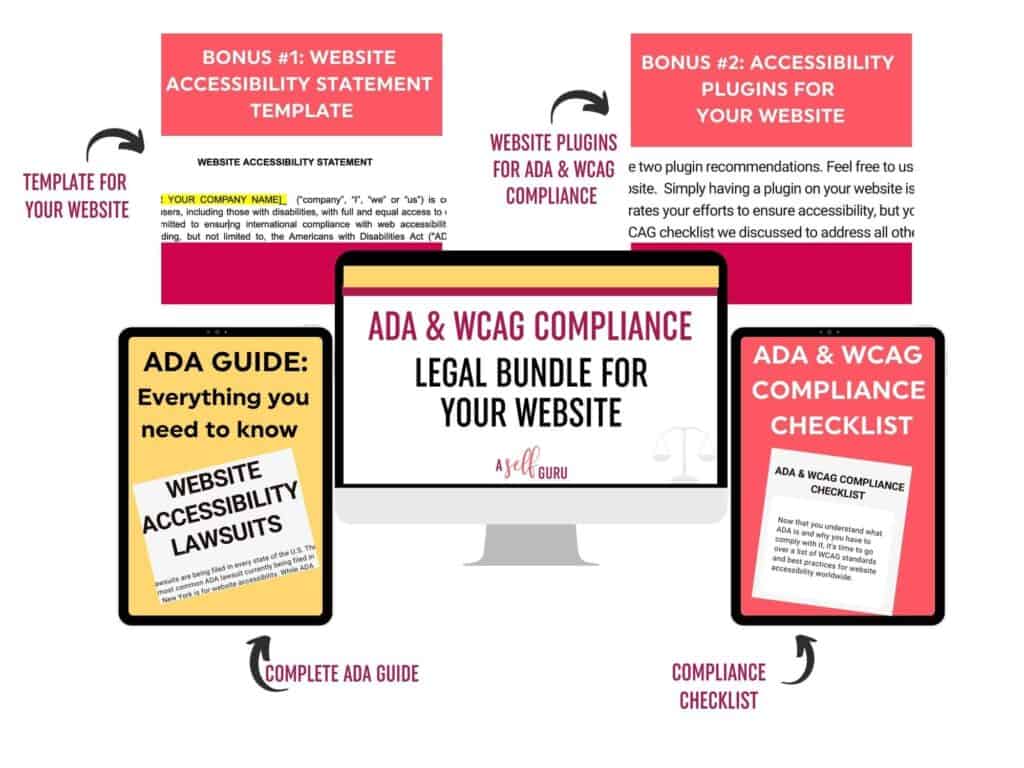
Use this ADA website legal bundle to make your content and website accessible. Your website design should be compliant to avoid legal issues.
Also, check your loading speed of the website because it affects both user experience and search rankings.
Compress images appropriately to maintain quality while ensuring fast page load times.
3. Email Marketing Enhancement
Visual content can significantly improve email marketing performance, but it requires careful balance.
Too many images might trigger spam filters, while too few might result in boring emails that get deleted.
Use visuals strategically to highlight key messages, showcase products, and create visual hierarchy within your emails.
A well-placed product image or infographic can dramatically increase click-through rates.
Ensure your visual content displays correctly across different email clients and devices.
Test your emails thoroughly before sending to avoid formatting issues that could harm your professional image.
How to Measure the Success of Your Visual Content
Key Performance Indicators
Track key metrics that align with your business objectives.
Engagement rates (likes, shares, comments) indicate how well your content resonates with audiences.
Click-through rates measure how effectively visual content drives traffic to your website or landing pages.
Conversion rates reveal whether your visual content actually drives business results.
Track how many people who engage with your visual content eventually become customers or take other desired actions.
Brand awareness metrics, including reach and impressions, help you understand how widely your visual content is being seen and shared.
Analytics Tools and Techniques
Use platform-specific analytics to understand performance on each channel.
Instagram Insights, Facebook Analytics, and YouTube Analytics provide detailed data about how your visual content performs with different audience segments.
Google Analytics can track how visual content on your website contributes to conversions. Set up goals to measure how users who interact with visual content behave differently from those who don’t.
Social listening tools can help you understand how your visual content is being discussed and shared as part of your marketing efforts.
Return on Investment Calculation
Calculate the true ROI and performance of your visual content by comparing creation costs with results.
Include both direct costs (photography, design, video production) and indirect costs (time, software subscriptions, training).
Look at both immediate and long-term returns. A high-quality video might drive immediate sales but also build brand awareness that contributes to future conversions.
Track the lifecycle of visual content to understand which pieces continue generating value over time. Some visual content continues driving traffic and conversions months or even years after creation.

Common Visual Content Mistakes to Avoid
Many businesses make the mistake of prioritizing quantity over quality in their social media marketing.
Posting mediocre visual content frequently is less effective than sharing high-quality content less often.
Poor-quality images reflect poorly on your brand and can actually harm your professional reputation.
Inconsistent branding across visual content confuses audiences and weakens brand recognition.
Ensure all visual content aligns with your brand guidelines and contributes to a cohesive brand identity and connects with your audience at an emotional level.
Ignoring platform specifications and audience preferences leads to suboptimal performance.
Content or video marketing that works well on one platform might fail completely on another if not properly adapted.
Failing to optimize visual content for search engines and social platforms misses opportunities for organic discovery.
Use Rankiq to rank blog posts on the first page of Google.
Use relevant keywords in file names, alt text, and descriptions to improve searchability.
Future Trends in Visual Content Marketing
Artificial intelligence (AI) is revolutionizing visual content creation.
AI tools can generate custom graphics, edit videos, and even create personalized visual content at scale.
Make sure to use this AI disclaimer if you are using AI tools in your business marketing.
While these tools won’t replace human creativity, they can significantly enhance efficiency and capabilities.
Mobile-first visual content will become even more critical as mobile usage continues to grow. Design visual content primarily for mobile viewing, then adapt for desktop rather than the other way around.
Interactive and immersive experiences will become more mainstream as technology becomes more accessible. Augmented reality, virtual reality, and interactive video content will offer new opportunities for engagement.
Personalization will extend to visual content, with brands creating customized images and videos based on user behavior, preferences, and demographics.

Frequently Asked Questions about the Importance of Visual Content
Below are answers to common questions about the importance of visual content for visual learners.
What is the most important factor for your visual content?
The most important factor for your visual content is its effectiveness in achieving your desired outcome.
Whether you are looking to increase brand awareness, drive sales, or engage with your audience, the success of your visual content will be measured by how well it achieves its intended purpose.
However, to increase the power of visual content, prioritize quality over quantity, relevance of your content to your audience, and stay consistent.
How much should I budget for visual content creation?
Budget allocation depends on your business size and marketing goals, but visual content should represent a significant portion of your marketing investment.
Many successful businesses allocate 20-40% of their marketing budget to visual content creation and promotion. Start with what you can afford and increase investment as you see higher conversion rates.
Can I use stock photos, or do I need original photography?
Stock photos can be useful for certain applications, but original photography typically performs better because it’s unique to your brand.
If you use stock photos, choose high-quality options that align with your brand aesthetic and avoid overused images that audiences might recognize from other brands.
How often should I post visual content?
Quality matters more than frequency, but consistency is important for building audience engagement.
Most successful brands post visual content several times per week across their channels. Focus on maintaining a consistent schedule rather than posting as much as possible.
What’s the best way to repurpose visual content across various platforms?
Create core visual content that can be adapted for multiple platforms rather than starting from scratch for each channel.
A single photoshoot can provide images for social media, website, email marketing, and print materials.
Adapt dimensions and messaging for each platform while maintaining consistent branding.
How do I measure the ROI of visual content?
Track metrics and latest trends that align with your business goals, including engagement rates, website traffic, lead generation, and sales conversions.
Use analytics tools to attribute conversions to specific visual content pieces and calculate the revenue generated compared to creation costs.
Should I hire professionals or create visual content in-house?
This depends on your budget, skills, and quality requirements.
Professional photographers and designers typically produce higher-quality content, but in-house creation offers more control and can be more cost-effective for high-volume needs.
Many businesses use a hybrid approach, creating some content in-house while outsourcing complex projects.

Final Thoughts on the Importance of Visual Content
Visual content leaves a lasting impression and works great on different platforms to reach your target audience.
When implemented strategically, it can transform how audiences perceive and interact with your brand.
The businesses that thrive will be those that embrace visual storytelling while maintaining authenticity and focusing on genuine value creation.
Success with visual content requires commitment, consistency, and willingness to experiment and learn.
Start with one or two types of visual content, master them, then gradually expand your capabilities.
Remember that great visual content serves your audience first and your business second—when you provide genuine value through engaging visuals, business results naturally follow.
RELATED BLOG POSTS ON IMPORTANCE OF VISUAL CONTENT
In addition to learning about the importance of visual content, you should check out my legal tips page here along with these helpful articles next:
- 11 Website Legal Pages Every Online Business Needs
- When to Hire a New Jersey Accident Lawyer
- 15 Essential Legal Tips for Startups
- 23 Legal Tips for Small Business Owners
- Why You Need an AI disclaimer in your business
Subscribe to my YouTube channel for more legal and business tips.
VISIT THIS FREEBIES PAGE TO GET 5 AWESOME FREE BUSINESS, BLOGGING AND LEGAL TIPS!
Below are some more helpful blog posts, legal tips, tools, and resources that you should check out next:
Outrank your competition and enhance your content creation
How to Legally Protect Your Book (with Proper Copyright Notice and Disclaimer Examples)
AI writing tool to write blog posts 10x faster, create social media content, videos, and any kind of content to save time in business
This SEO tool makes sure your blog posts rank on the first page of Google!
Manage your accounting effortlessly with this amazing tool.
MORE TOOLS TO GROW YOUR ONLINE BUSINESS
TubeBuddy to grow your YouTube channel, and this is another great tool for YouTube SEO.
Free SEO Masterclass to learn how to optimize your blog posts for SEO to rank on Google. You can also buy this awesome bundle of ebooks instead if you prefer ebooks over video training.
Best accounting software to manage profit and loss and more!
Best registered agent service for your new LLC.
A great all-in-one business platform for hosting your course, email communications, sales pages, and more!
How to start your blogging business and make money online
The Best Freelance Writing Contract Template (for writers and clients)
Guest Blogger Agreement to publish guest posts on your website legally and avoid any copyright infringement, Media release agreement to be able to use other people’s photos, videos, audio, and any other content legally, Privacy policy on your website to ensure your blog’s legal compliance, Disclaimer to limit your legal liability, Terms and Conditions to set your blog rules and regulations! Get all of these templates at a discounted rate in one of my best-selling VIP legal bundle here.